
Supporting High-Frequency Trading with Lukka
How a leading algorithmic trading firm used Lukka to keep high-frequency trading data clean, mapped and ready as new assets launch.
Case study · Algorithmic trading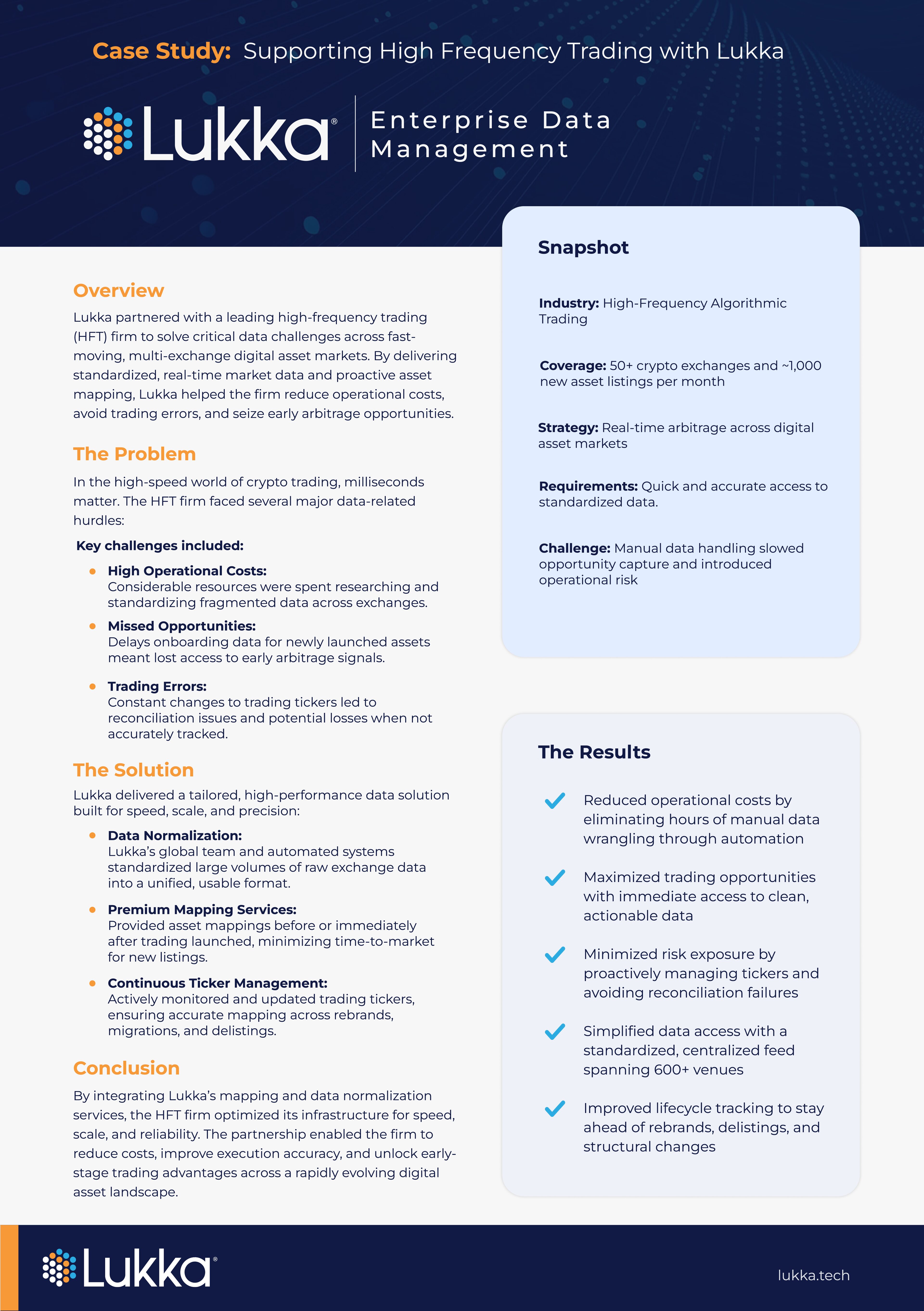
Manual data work slowed the trading desk
Manual handling and ticker changes
Manual data handling slowed the firm, and frequent ticker changes caused reconciliation issues and possible losses.
Slow onboarding of new assets
Researching fragmented exchange data took significant resources, and delayed onboarding meant missed early arbitrage signals.
Clean high-frequency trading data from day one
Continuous ticker management
Tickers stay accurately mapped through rebrands, migrations and delistings.
Data normalization
Automated systems and a global team turn raw exchange data into one unified format.
Premium mapping services
Asset mappings delivered before or right after trading launches.
Lower costs, more opportunities, less risk
- Lower operational costs from automating manual data work
- More trading opportunities through faster access to clean data
- Reduced risk exposure by proactively managing tickers
- A standardized, centralized feed across venues
- Better lifecycle tracking for rebrands, delistings and structural changes
Read the full case study
See how clean, mapped data supports high-frequency trading.
High-Frequency Trading Data: FAQs
Why does high-frequency trading data need ticker management?
Tickers change through rebrands, migrations and delistings. If mappings fall behind, positions fail to reconcile and trades can be mispriced.
How does Lukka speed up onboarding of new assets?
Premium mapping services deliver asset mappings before or right after a trading launch, so new listings are tradeable sooner.
Which Lukka data supports trading firms?
Mapping and standardization data and normalized market data. Contact our team to learn more.